23 Nov 2026
App Update Cycles and Their Influence on Worldwide Freeroll Accessibility
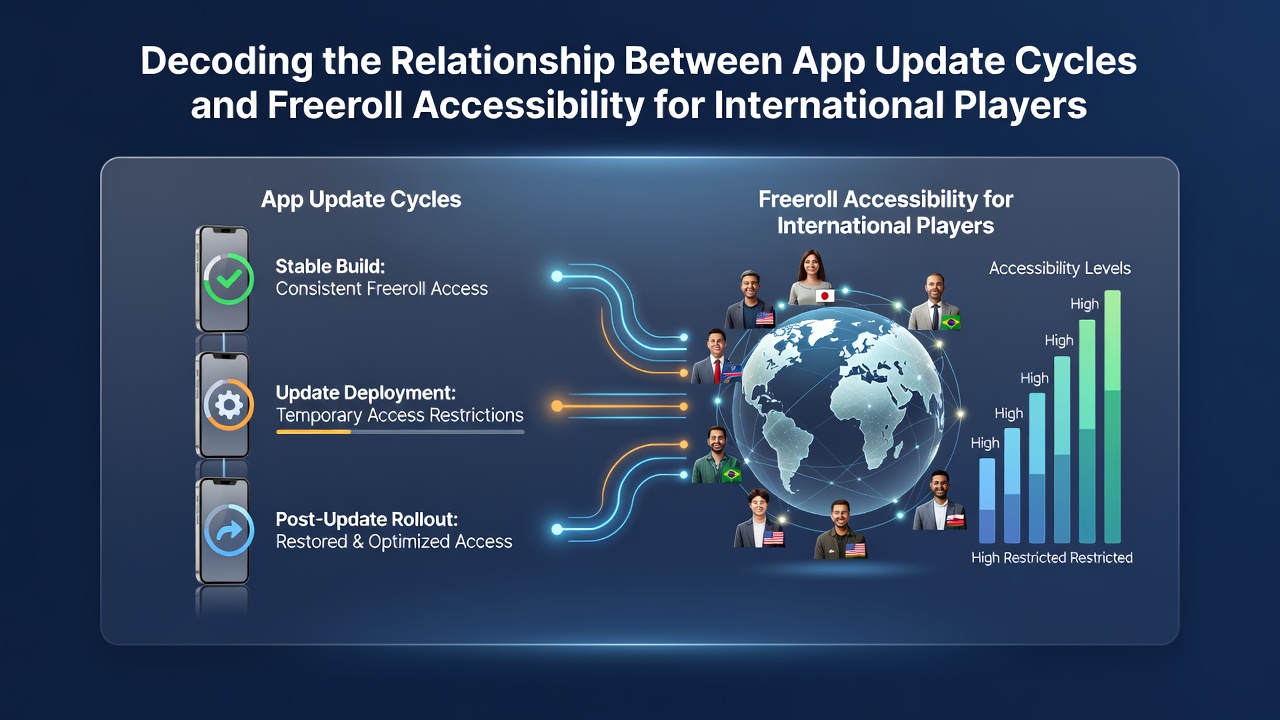
App update cycles in poker platforms follow structured release patterns that often coincide with regulatory reviews and server maintenance windows, and these intervals directly affect how international players gain entry to freerolls. Data from mobile gaming analytics shows that major version releases occur on average every 45 to 60 days across leading networks, while minor patches addressing security or compliance appear more frequently in regions with strict data protection rules.
Technical Patterns in Update Deployment
Developers roll out changes through staggered regional servers so that European users might receive an update days before those in Asia or South America, and this sequencing creates temporary gaps where freeroll registration portals become unavailable or display inconsistent entry requirements. Research from industry monitoring groups indicates that during these transition periods the number of active international accounts attempting freeroll sign-ups drops by measurable percentages until full synchronization completes across all zones.
November 2026 brought several coordinated client refreshes tied to end-of-year compliance deadlines, and observers noted that players in multiple jurisdictions experienced delayed access to scheduled freerolls until the new builds propagated through app stores in their locations. Those tracking participation metrics found that recovery to normal entry volumes typically required between 72 and 96 hours after the final regional deployment.
Effects on International Player Entry
Freeroll tournaments rely on real-time verification of player location and account status, yet app updates frequently alter the underlying authentication modules that handle these checks. When an update modifies how deposit histories or regional restrictions are processed, international users encounter mismatches between the client version on their device and the tournament server's expectations, which blocks registration until both sides align. Studies of player behavior during such windows reveal that participants from countries with slower app store approval processes face extended exclusion periods compared with those in markets where updates clear quickly.
Regional Variations and Compliance Factors
Regulatory bodies in different territories impose distinct testing requirements before new app versions reach users, and these differences amplify accessibility disparities for freerolls. According to reports from the Australian Communications and Media Authority, platforms must demonstrate updated responsible gaming features before distribution in that market, which can delay rollout by one to two weeks relative to other regions. Similar processes in Canadian provinces create parallel lags that affect cross-border players who rely on consistent app functionality to track and enter scheduled events.
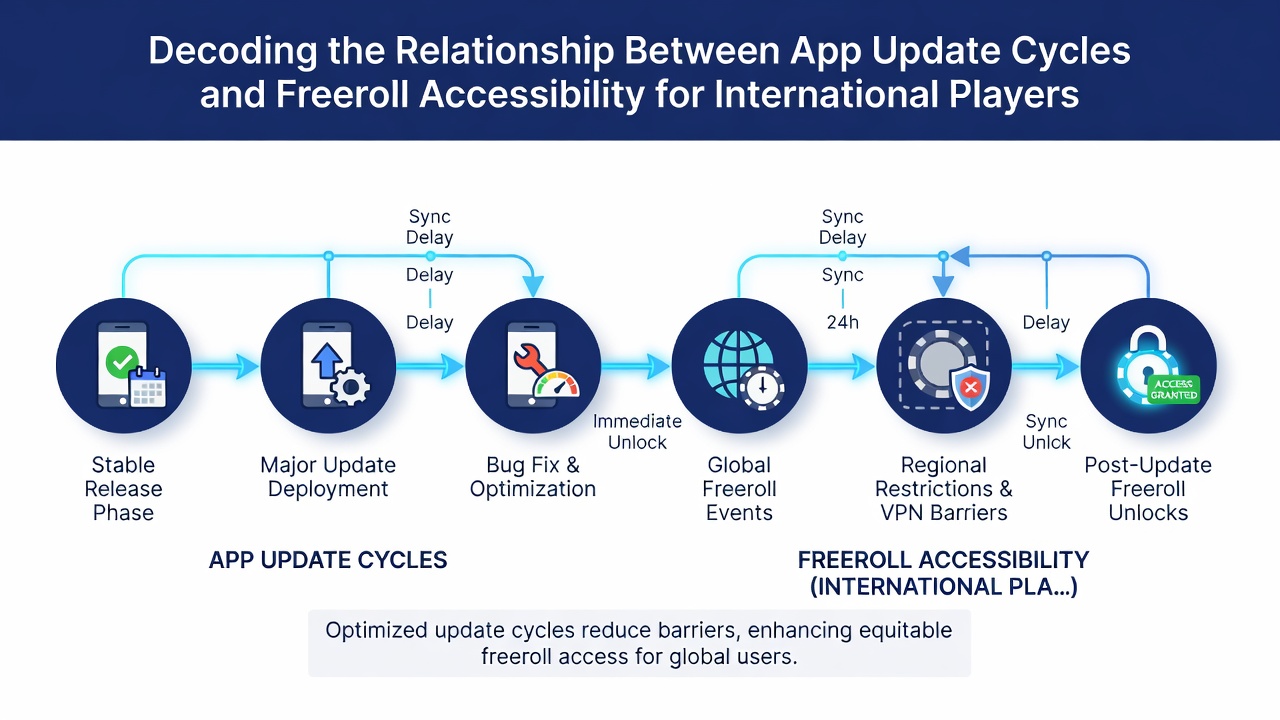
Network operators respond by maintaining backward compatibility layers for older client versions during transition phases, yet these layers sometimes limit access to newer freeroll formats that require the latest security protocols. Data compiled by academic researchers at gaming technology centers shows that players using legacy builds after a major update experience reduced notification accuracy for upcoming freerolls, leading to missed registration windows even when the underlying tournament remains open.
Payment Integration and Synchronization Issues
Updates often include revised payment gateways that interact with freeroll qualification criteria, and international players using alternative funding methods encounter verification delays when the new modules activate. The European Gaming and Betting Association has documented cases where revised deposit confirmation routines temporarily prevented account status from updating in real time, thereby excluding otherwise eligible participants from no-deposit events until the issue resolved through subsequent patches.
Those monitoring long-term trends note that networks increasingly publish detailed update schedules in advance, allowing international users to anticipate potential disruptions and adjust their participation strategies accordingly. This practice reduces but does not eliminate the friction created when server-side changes outpace client-side adoption in certain geographic areas.
Conclusion
App update cycles continue to shape freeroll accessibility through their effects on authentication, regional compliance timing, and payment verification systems, and international players navigate these patterns by monitoring release notes and maintaining compatible device configurations. Ongoing refinements in deployment methods and cross-region synchronization point toward incremental improvements in consistency for users worldwide as networks adapt to evolving regulatory landscapes.