24 Aug 2026
Mobile Poker Tournament Dynamics Shift with Advances in Global Payment Technologies
 Payment systems for mobile poker have incorporated digital wallets, cryptocurrency options, and instant transfer protocols over recent years, and these changes have altered how users approach tournament participation across regions. Data from industry tracking services shows that entry volumes in mobile tournaments rose steadily through 2025 and into August 2026, coinciding with wider availability of real-time funding tools in markets such as Southeast Asia and Latin America. Observers note that faster deposit confirmation times allow players to adjust entry decisions closer to tournament start times rather than committing hours or days ahead. This flexibility influences stack management choices because users can respond to last-minute schedule updates or field size announcements without waiting for traditional banking clearances. Research from academic groups examining digital transaction patterns indicates that regions with widespread mobile payment adoption record higher rates of multi-table entries per user compared to areas still reliant on slower card-based methods.
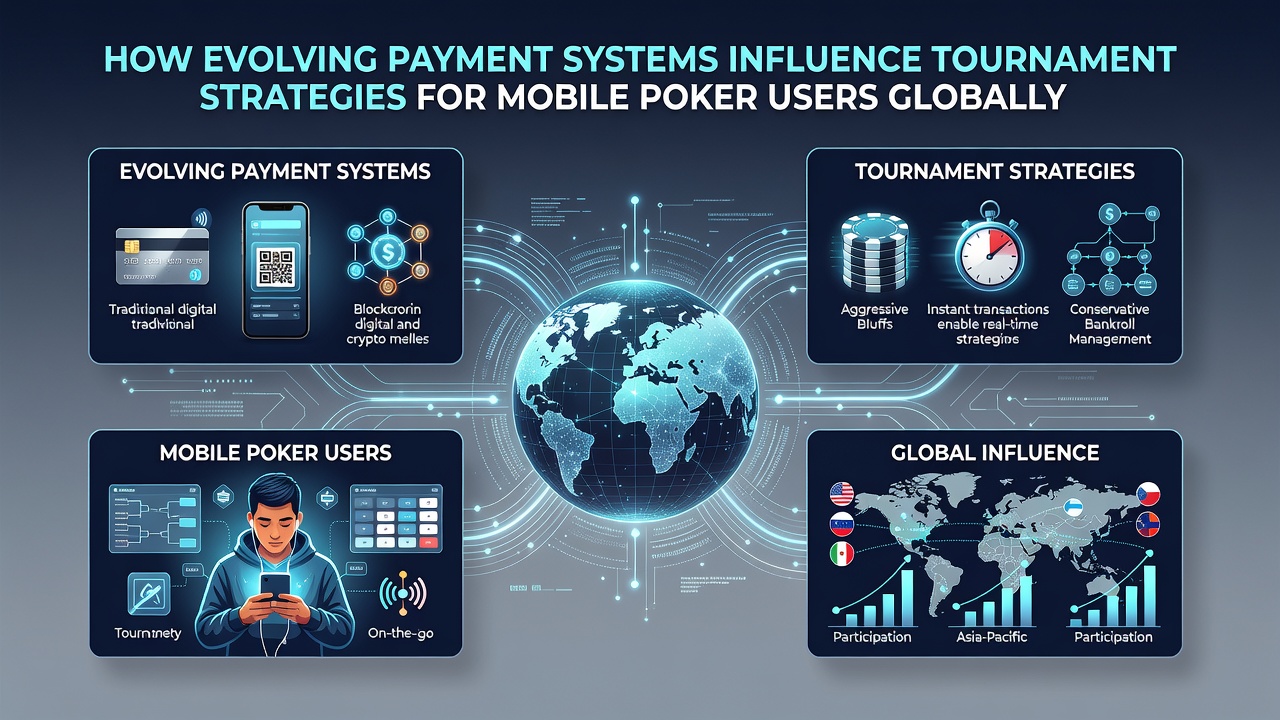 Mobile interfaces also surface promotional deposit bonuses tied to specific tournament series, and players incorporate these offers into entry calendars to maximize effective bankroll allocation. Data collected by gaming analytics firms shows that users who link multiple payment accounts tend to maintain steadier participation rates across weekly schedules, even when one funding source encounters temporary restrictions. This approach appears in usage logs from networks operating in both established and emerging markets.
Payment systems for mobile poker have incorporated digital wallets, cryptocurrency options, and instant transfer protocols over recent years, and these changes have altered how users approach tournament participation across regions. Data from industry tracking services shows that entry volumes in mobile tournaments rose steadily through 2025 and into August 2026, coinciding with wider availability of real-time funding tools in markets such as Southeast Asia and Latin America. Observers note that faster deposit confirmation times allow players to adjust entry decisions closer to tournament start times rather than committing hours or days ahead. This flexibility influences stack management choices because users can respond to last-minute schedule updates or field size announcements without waiting for traditional banking clearances. Research from academic groups examining digital transaction patterns indicates that regions with widespread mobile payment adoption record higher rates of multi-table entries per user compared to areas still reliant on slower card-based methods.Regional Payment Variations and Entry Timing
Payment infrastructure differs sharply by jurisdiction, and these differences shape when and how often mobile users join tournaments. In markets where e-wallet services integrate directly with poker applications, participants frequently monitor field sizes until registration closes and then fund accounts within seconds. Australian regulatory filings on online gaming transactions document this pattern among users who rely on instant bank transfers, showing clustered entry activity in the final hour before major events. European operators have introduced tokenized payment solutions that reduce processing delays, and figures from trade association reports reveal corresponding increases in satellite tournament entries that feed into larger main events. Meanwhile, cryptocurrency gateways popular in parts of South America introduce price volatility considerations into bankroll planning, prompting users to time deposits when exchange rates favor larger effective balances. Those tracking global participation data note that such currency-linked strategies appear most often among users balancing multiple regional platforms.Software Adjustments and Deposit Integration
Poker applications have embedded payment modules that display available funding methods alongside tournament lobbies, and this integration affects strategic planning. Users can now view deposit limits and processing speeds before selecting events, which reduces instances of failed registrations due to insufficient cleared funds. Studies conducted by university research teams on user behavior in digital gaming environments found that platforms offering seamless wallet connections experience fewer abandoned carts during the entry process.
Mobile interfaces also surface promotional deposit bonuses tied to specific tournament series, and players incorporate these offers into entry calendars to maximize effective bankroll allocation. Data collected by gaming analytics firms shows that users who link multiple payment accounts tend to maintain steadier participation rates across weekly schedules, even when one funding source encounters temporary restrictions. This approach appears in usage logs from networks operating in both established and emerging markets.